Scrolling through TikTok comments or a meme caption, you might come across the word “tism” and pause, unsure whether it’s a typo, an inside joke, or something else entirely.
Unlike a lot of texting slang that exists purely for convenience, this particular term is tied to a real community and identity, which makes understanding its context especially important before using it yourself.
Quick Answer:
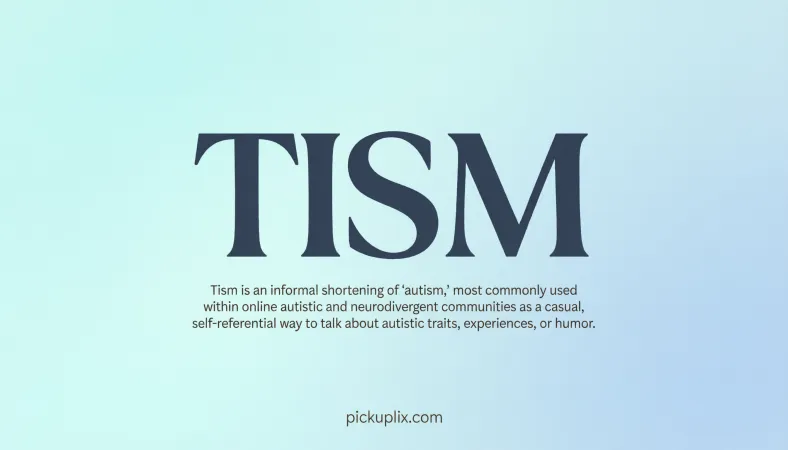
Tism is an informal shortening of “autism,” most commonly used within online autistic and neurodivergent communities as a casual, self-referential way to talk about autistic traits, experiences, or humor.
What Does Tism Mean?
Tism is a slang shortening of the word “autism,” used primarily online in casual, often humorous or self-aware ways. It’s frequently used by autistic individuals themselves to describe traits, hyperfixations, social quirks, or shared experiences within the neurodivergent community, similar to how other reclaimed or community-created terms function.
This kind of language often emerges from a broader movement toward neurodiversity, the idea that neurological differences like autism are natural variations of human experience rather than something to be fixed or hidden. Using informal, community-created language can be a way of reducing stigma and building connection among autistic people.
Example Sentence: She joked about her “tism” showing when she rearranged her entire bookshelf by color at 2 a.m.
In short: Tism = Informal Slang for Autism = Often Used Self-Referentially Within Neurodivergent Communities.
Where Is “Tism” Commonly Used?
- 💬 Online autistic and neurodivergent communities — The primary context where this term originated and remains most appropriate
- 📱 TikTok, Instagram, and meme culture — Frequently appears in captions or comments related to autism humor or shared experiences
- 🎮 Gaming and Discord communities — Sometimes used casually among neurodivergent gamers
- 👥 General Gen Z internet slang — Has spread beyond its original community, which is part of why context and intent matter so much
Because this term touches on a real identity and lived experience, tone, relationship, and context matter significantly more than with typical casual slang.
Why Context and Tone Matter So Much Here
Unlike more neutral texting abbreviations, “tism” carries real weight because it references a genuine neurological and personal identity. Within autistic communities, it’s often used with humor, self-awareness, and solidarity, similar to how other communities sometimes use informal language about their own shared experiences.
However, this term can feel very different depending on who’s using it and why. When used by autistic individuals about themselves or their own community, it’s generally understood as lighthearted or affectionate. When used by someone outside that community, especially to mock, generalize, or joke at someone else’s expense, it can come across as dismissive or disrespectful.
Examples of “Tism” in Conversation
A: I reorganized my whole spice rack by expiration date instead of sleeping B: the tism is showing today lol
A: why do you know so much about this one specific topic B: honestly just a hyperfixation, classic tism moment
A: Are you good? you’ve been really quiet in the group today B: yeah just an overstimulating day, tism things
A: he really does the same routine every single morning B: yep, that’s just how his tism works, it’s comforting for him
When This Term Is and Isn’t Appropriate
✅ Generally considered appropriate:
- When autistic individuals use it self-referentially or within their own community
- In supportive, humorous contexts among people who share that identity or understand it well
- When used with genuine familiarity and respect
❌ Generally not appropriate:
- Using it to mock, generalize, or make fun of someone else’s autism
- Using it casually without understanding its connection to a real identity
- In formal, professional, or unfamiliar settings
| Context | Example Phrase | Why It Works |
| Within Community | “tism moment, love that for me” | Self-referential and lighthearted |
| Formal Writing | “as someone on the autism spectrum” | Clear, respectful, and appropriate |
| Unfamiliar Audience | “he’s autistic” | Neutral and universally understood |
Similar Terms Worth Knowing
| Term | Meaning | Context |
| Neurospicy | A playful, community-created term for neurodivergence | Used similarly within neurodivergent spaces |
| Neurodivergent | A broader term covering autism, ADHD, and other neurological variations | Formal and everyday use |
| Stimming | Self-stimulating behaviors common among autistic individuals | Educational and community discussions |
| Special interest | A term for intense, focused interests common in autism | Everyday and clinical discussions |
FAQs About Tism Meaning
What does tism mean?
Tism is an informal slang shortening of “autism,” commonly used within autistic and neurodivergent online communities as a casual, often self-referential term.
Is it okay for anyone to use the word tism?
It depends heavily on context and intent. It’s most appropriate when used by autistic individuals themselves or within communities that understand its meaning and tone.
Is tism considered offensive?
It can be, particularly when used to mock or generalize about autism from outside the community. Within the community, it’s often used affectionately or humorously.
What is neurodiversity?
Neurodiversity is the concept that neurological differences, including autism, are natural variations of human experience rather than disorders requiring a cure.
Should I use this word if I’m not autistic?
It’s generally best to be cautious, since reclaimed or community-specific language often carries different meanings depending on who’s using it.
Is there a more formal or neutral alternative?
Yes, terms like “autistic” or “on the autism spectrum” are clear, respectful, and appropriate across nearly any context, formal or casual.
Conclusion
Tism is more than just internet shorthand, it’s a term deeply connected to real identity, community, and the broader neurodiversity movement. Within autistic spaces, it often serves as a lighthearted, self-aware way to talk about shared experiences. Understanding its context and origin helps ensure it’s used respectfully, recognizing that language tied to identity carries more weight than typical casual slang.
Pickuplix Team creates fun, clever pickup lines for every mood and occasion, along with clear, accurate word and slang meaning guides. From flirty icebreakers to breaking down the latest texting slang, we’re here to help you communicate with confidence.