Have you ever come across someone saying, “That was so callous,” in a text or social media comment and wondered what they meant?
At first glance, you might think it’s a slang word or internet abbreviation, but it’s actually a common English adjective used to describe someone’s attitude or behavior.
If you’re searching for callous meaning, you’re probably trying to understand whether it’s an insult, when people use it online, and how it fits into everyday conversations.
The good news is that it’s easy to understand once you know the context.
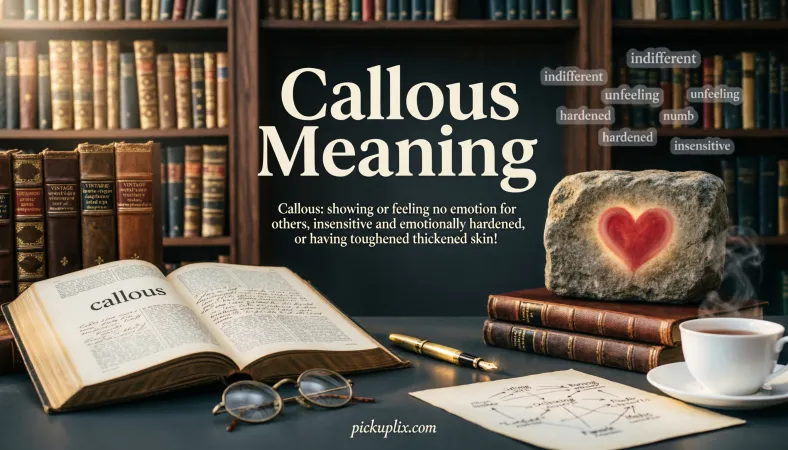
Quick Answer: Callous means emotionally insensitive or lacking sympathy for others.
It’s usually used in a negative and serious way to describe someone who doesn’t seem to care about other people’s feelings.
What Does Callous Mean in Text?
In texting and online conversations, callous describes someone whose words or actions seem cold, uncaring, or lacking empathy. Unlike internet slang, it isn’t an abbreviation or acronym. Instead, it’s a regular English word that people often use when discussing someone’s behavior.
For example, if someone laughs after hearing bad news about another person, a friend might reply:
“That was really callous.”
This means the person’s reaction seemed insensitive or heartless.
Although the word sounds strong, it’s commonly used in everyday conversations, news articles, social media discussions, and online debates.
Example:
A: He joked about her losing her job.
B: Wow, that’s pretty callous.
In short: Callous = Emotionally insensitive = Showing little or no concern for other people’s feelings.
Where Is Callous Commonly Used?
Although callous isn’t internet slang, it’s frequently used in digital conversations to describe someone’s behavior.
📱 Text Messages
- Discussing someone’s rude actions
- Talking about personal conflicts
- Sharing opinions
- Comment sections
- Discussions about celebrities
- Story replies
🎵 TikTok
- Reaction videos
- Comment threads
- Relationship content
🐦 X (Twitter)
- Debates
- News discussions
- Public opinions
🎮 Gaming Chats
Occasionally used when someone acts unfairly or insults teammates.
📰 News & Articles
Journalists often use callous to describe insensitive remarks or actions by public figures.
Tone
- ✅ Serious
- ✅ Negative
- ✅ Social-media friendly
- ⚠️ Not playful or flirty
- ✅ Appropriate in formal writing
Examples of Callous in Conversation
Example 1
A: He laughed when she started crying.
B: That’s really callous.
Example 2
A: They ignored everyone affected.
B: pretty callous if you ask me.
Example 3
A: Did you hear what he posted?
B: yeah… it sounded callous 😕
Example 4
A: She never apologized.
B: That’s a callous way to treat people.
Example 5
A: He mocked the accident online.
B: Honestly, that’s callous.
Example 6
A: They fired him without warning.
B: That feels pretty callous.
Example 7
A: Why is everyone upset?
B: because her comment came across as callous.
When to Use and When Not to Use Callous
✅ When to Use
Use callous when:
- Describing insensitive behavior
- Talking about someone’s lack of empathy
- Discussing serious situations
- Writing reviews or opinions
- Explaining hurtful comments
❌ When Not to Use
Avoid callous when:
- Chatting casually with friends unless it fits the context
- Giving compliments
- Making jokes
- Describing someone you don’t know well without evidence
- Referring to minor mistakes or accidents
Comparison Table
| Context | Example Phrase | Why It Works |
| Friend Chat | “That was really callous.” | Describes insensitive behavior clearly |
| Social Media | “His response felt callous.” | Common in online discussions |
| Workplace | “The manager’s remarks appeared callous.” | Professional wording |
| “The response seemed insensitive.” | More neutral for formal writing | |
| News Article | “Critics called the comments callous.” | Frequently used in journalism |
Similar Words or Alternatives
| Word | Meaning | When to Use |
| Heartless | Shows no compassion | Strong criticism |
| Cold | Emotionally distant | Everyday conversations |
| Insensitive | Doesn’t consider others’ feelings | General use |
| Cruel | Intentionally hurtful | Serious situations |
| Mean | Unkind | Casual conversations |
| Ruthless | Shows no mercy | Business or competitive contexts |
FAQs About Callous
What does callous mean in texting?
It means someone is acting without sympathy or concern for another person’s feelings.
Is callous a slang word?
No. Callous is a standard English adjective, not internet slang or an abbreviation.
Is callous always negative?
Yes. It almost always carries a negative meaning because it describes emotionally insensitive behavior.
Can callous describe actions as well as people?
Yes. You can describe both a person’s behavior and a specific action as callous.
Is callous formal or casual?
It’s suitable in both casual conversations and formal writing, depending on the context.
What’s the difference between callous and rude?
Someone who is rude may simply have poor manners. Someone who is callous lacks empathy and concern for others’ feelings, making it a stronger criticism.
Final Thoughts
Understanding the callous meaning can help you better interpret conversations, social media posts, and news stories. While it isn’t a texting abbreviation or internet slang, it’s a commonly used word that describes people or actions that seem emotionally cold or insensitive. Knowing when to use it correctly allows you to express opinions more clearly and recognize the tone behind what others are saying online.

Pickuplix Team creates fun, clever pickup lines for every mood and occasion, along with clear, accurate word and slang meaning guides. From flirty icebreakers to breaking down the latest texting slang, we’re here to help you communicate with confidence.