Have you ever been scrolling through social media or chatting with a friend when someone described a photo, song, or message as “evocative”?
The first time I saw the word, I assumed it was another internet slang term. After looking it up, I realized it wasn’t slang at all.
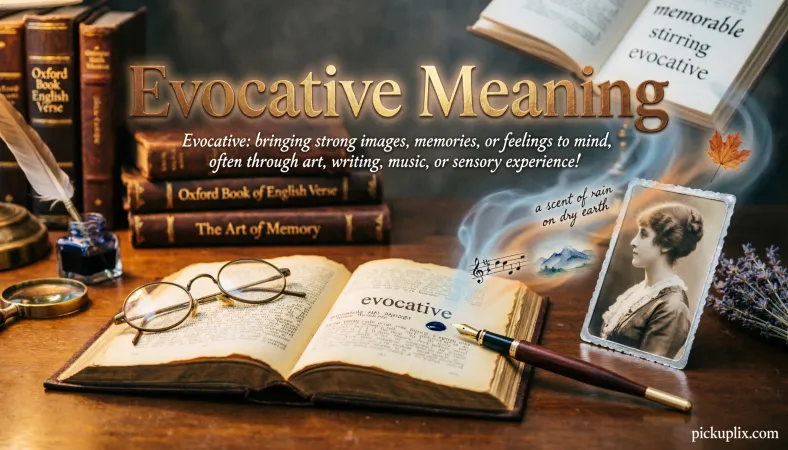
Instead, it’s a powerful English word people use to describe something that brings back emotions, memories, or vivid mental images.
Quick Answer:
Evocative means “bringing strong feelings, memories, or images to mind.” It’s a descriptive and expressive word used to explain something that emotionally affects a person.
What Does Evocative Mean in Text?
In texting, social media, or everyday conversations, evocative describes something that creates a strong emotional response or reminds someone of a particular memory, feeling, or experience.
People often use the word when talking about photos, music, movies, poems, books, artwork, or meaningful messages.
Example:
“That old family picture is so evocative. It reminds me of our childhood.”
In this sentence, the picture brings back happy memories and emotions.
In short: Evocative = Brings back feelings or memories = Emotionally meaningful.
Where Is Evocative Commonly Used?
Although it isn’t internet slang, the word evocative appears in many online and offline conversations.
📱 Common Places You’ll See It
- 💬 Text messages
- 📸 Instagram captions
- 🎵 Music reviews
- 🎬 Movie discussions
- 📚 Book reviews
- 🎨 Art conversations
- 📝 Blog articles
- 🐦 Social media posts
- 🎮 Story-driven gaming communities
Is It Formal or Casual?
- ✅ Formal writing
- ✅ Casual conversations
- ✅ Social media friendly
- ✅ Educational discussions
- ❌ Not considered slang
Examples of Evocative in Conversation
Example 1
A: Did you hear that old song?
B: yeah, it’s really evocative 🥹
Example 2
A: What do you think of this painting?
B: It’s incredibly evocative. It makes me think of home.
Example 3
A: That movie ending…
B: so evocative. I couldn’t stop thinking about it.
Example 4
A: I love this sunset photo.
B: Same! it’s really evocative ❤️
Example 5
A: Why do you like that poem?
B: because it’s so evocative and emotional.
Example 6
A: That speech gave me goosebumps.
B: Definitely. It was very evocative.
Example 7
A: This place feels familiar.
B: It’s surprisingly evocative of our childhood vacations.
When to Use and When Not to Use Evocative
✅ When to Use
- Describing emotional photos.
- Talking about music or songs.
- Reviewing movies or books.
- Discussing artwork.
- Sharing meaningful memories.
- Explaining emotional experiences.
❌ When Not to Use
- Giving technical instructions.
- Writing business reports.
- Discussing numbers or statistics.
- Explaining simple facts without emotion.
- Urgent or emergency messages.
Usage Comparison
| Context | Example Phrase | Why It Works |
| Friend Chat | “That photo is so evocative 🥹” | Expresses an emotional reaction naturally. |
| Work Chat | “The presentation included evocative storytelling.” | Professional but descriptive. |
| “The article uses evocative language to engage readers.” | Appropriate in formal writing. |
Similar Words or Alternatives
| Word | Meaning | When to Use |
| Emotional | Full of feelings | Everyday conversations |
| Moving | Emotionally touching | Movies, speeches, stories |
| Expressive | Shows emotions clearly | Art and writing |
| Nostalgic | Brings back happy memories | Childhood or past experiences |
| Powerful | Strong emotional impact | Reviews and discussions |
| Thought-provoking | Makes people think deeply | Books, speeches, articles |
FAQs About Evocative
What does evocative mean?
It means something that brings strong memories, emotions, or mental images to mind.
Is evocative a slang word?
No. It’s a standard English adjective commonly used in both casual and formal conversations.
Can evocative be used in texting?
Yes. People often use it when reacting to emotional photos, songs, videos, or memories.
Is evocative positive or negative?
Usually positive, but it can describe both happy and sad emotions depending on the context.
What kinds of things can be evocative?
Music, movies, books, artwork, photographs, speeches, places, and even certain smells can all be evocative.
What’s the difference between emotional and evocative?
Emotional describes feelings directly, while evocative describes something that causes those feelings or memories.
Is evocative a compliment?
Yes. Calling a piece of art, writing, or music evocative is generally considered a compliment because it means it has a strong emotional impact.
Final Thoughts
The word evocative refers to anything that brings memories, emotions, or vivid images to your mind. While it isn’t texting slang, it’s a useful word you’ll often see in conversations about music, movies, books, photography, art, and meaningful experiences. Whether you’re chatting with friends or writing a review, using evocative words helps describe moments that leave a lasting emotional impression.

Pickuplix Team creates fun, clever pickup lines for every mood and occasion, along with clear, accurate word and slang meaning guides. From flirty icebreakers to breaking down the latest texting slang, we’re here to help you communicate with confidence.