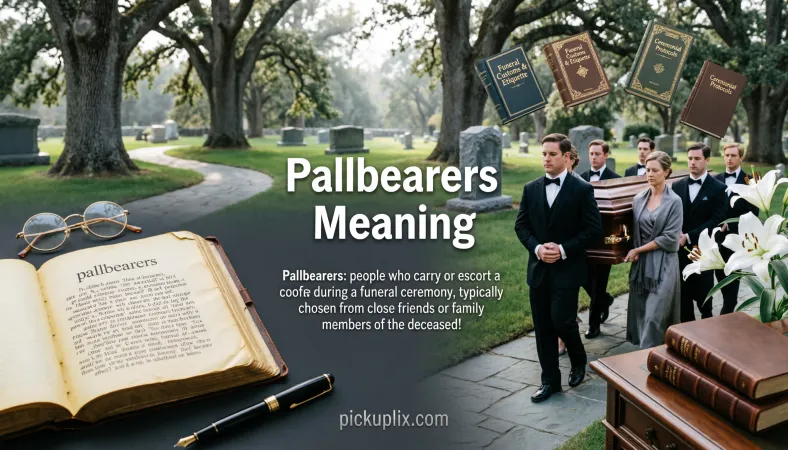
If you’ve ever attended a funeral or watched one in a movie, you may have heard someone mention pallbearers.
At first, the word can sound unfamiliar, and many people wonder what it actually means.
Is it a special title? Is it a family role? Or does it describe someone with a specific responsibility during a funeral?
The answer is simpler than you might think. Pallbearers play an important role in honoring the person who has passed away.
They help carry or escort the casket during the funeral service while showing respect and support to the grieving family.
Quick Answer:
A pallbearer is a person chosen to help carry or accompany a casket during a funeral.
It is a respectful and ceremonial role that symbolizes honor, remembrance, and support for the deceased and their loved ones.
What Does Pallbearers Mean?
Pallbearers are individuals selected to carry or escort a casket during a funeral or memorial service. The term is the plural form of pallbearer, meaning more than one person performs this responsibility.
Traditionally, six people serve as pallbearers because a standard casket usually has six handles. However, the number can vary depending on the casket’s design, its weight, and the family’s wishes.
The word pallbearer comes from the historical term “pall,” which referred to the decorative cloth draped over a coffin. Originally, pallbearers carried or supported this cloth during funeral ceremonies. Over time, the meaning evolved to describe the people who carry or accompany the casket itself.
Today, being asked to serve as a pallbearer is widely considered an honor. It reflects the trust, respect, and close relationship the person shared with the deceased or their family.
Simple Example
“Six close friends served as pallbearers during the funeral to honor their lifelong friend.”
In this example, the friends were chosen to help carry the casket and pay their final respects.
Featured Snippet Answer
Pallbearers are people selected to carry or escort a casket during a funeral. They help honor the deceased and support the family during the funeral service.
What Does a Pallbearer Do?
Many people assume a pallbearer’s only responsibility is carrying the casket. While that is often the primary duty, the role involves much more than physical assistance. Above all, a pallbearer represents dignity, respect, and compassion throughout the funeral.
Here are the main responsibilities of a pallbearer.
1. Carry the Casket
The most recognized duty is helping lift and carry the casket between locations, such as:
- From the funeral home
- Into the church or funeral venue
- From the service to the hearse
- From the hearse to the gravesite or mausoleum
Because caskets can be heavy, funeral directors usually guide pallbearers on how to lift and carry them safely.
2. Escort the Casket
Sometimes, the casket is transported using a wheeled bier rather than being carried.
In these situations, pallbearers walk alongside or behind the casket as an escort. Their presence still symbolizes honor and respect, even if they are not physically carrying it.
3. Follow the Funeral Director’s Instructions
Every funeral follows a planned order. Therefore, pallbearers should carefully follow the funeral director’s guidance regarding:
- Where to stand
- When to walk
- How to lift the casket
- Where to place it
Following these instructions helps ensure the ceremony proceeds smoothly and respectfully.
4. Show Respect Throughout the Ceremony
Being a pallbearer is not just about carrying the casket. It also means maintaining respectful behavior during the service.
Pallbearers should:
- Dress appropriately.
- Arrive early.
- Remain calm and composed.
- Avoid unnecessary conversations.
- Follow the family’s wishes at all times.
Their respectful presence provides comfort to grieving family members and reflects the significance of the occasion.
5. Offer Emotional Support
Although pallbearers have practical responsibilities, they also provide emotional support simply by being there.
Many families choose close relatives, lifelong friends, coworkers, or respected community members because these individuals shared a meaningful connection with the deceased.
Serving as a pallbearer demonstrates love, gratitude, and a final act of respect.
Honorary Pallbearers
In some funerals, there are also honorary pallbearers.
Unlike traditional pallbearers, honorary pallbearers do not carry the casket. Instead, they walk in the procession or are recognized during the ceremony because they held a special place in the deceased’s life.
This option allows elderly relatives or people with physical limitations to participate without lifting the casket.
Key Takeaway
Being a pallbearer is considered one of the highest honors at a funeral. The role combines practical responsibilities with a meaningful gesture of respect, allowing family members and close friends to say a final goodbye in a dignified and supportive way.
Who Can Be a Pallbearer?
One of the most common questions people ask is, “Who can be a pallbearer?” The answer is simple. Almost anyone the family trusts and respects can take on this role.
Traditionally, pallbearers are close family members or lifelong friends of the deceased. However, there is no strict rule about who must serve. Instead, the family decides who they would like to honor with this responsibility.
People Commonly Chosen as Pallbearers
Families often select:
- Adult sons or daughters
- Brothers and sisters
- Grandchildren
- Nephews or cousins
- Close friends
- Coworkers
- Military colleagues
- Members of a church or community group
Above all, the person should be reliable, respectful, and physically able to help if carrying the casket.
Can Women Be Pallbearers?
Yes. Today, women frequently serve as pallbearers.
In the past, many funerals followed traditions where only men carried the casket. However, modern funeral services are much more inclusive. Many families now choose daughters, sisters, granddaughters, nieces, or close female friends.
The decision depends entirely on the wishes of the deceased or their family.
Can Children Be Pallbearers?
Young children usually do not carry the casket because it requires strength and careful coordination.
However, older teenagers may serve as pallbearers if they feel emotionally prepared and are physically capable.
Some families also invite children to walk beside the procession as honorary participants instead.
Can Someone Decline?
Yes. Serving as a pallbearer is considered an honor, but no one is required to accept.
A person may decline if they:
- Feel emotionally overwhelmed
- Have health concerns
- Cannot safely lift the casket
- Are unable to attend the funeral
Most families understand and respect this decision.
How Many Pallbearers Are Usually Needed?
The number of pallbearers depends on the type of casket and the funeral arrangements.
Most funerals include six pallbearers, but some services may have four, eight, or even more.
Here’s a quick guide:
| Funeral Type | Typical Number of Pallbearers | Reason |
| Standard funeral | 6 | Most traditional caskets have six handles. |
| Small funeral | 4 | Lighter caskets may require fewer people. |
| Large or heavy casket | 8 | Extra support makes carrying safer. |
| Honorary pallbearers | Unlimited | They escort the casket without carrying it. |
The funeral director usually recommends the appropriate number based on the casket’s size and weight.
Funeral Etiquette for Pallbearers
Serving as a pallbearer is both an honor and a responsibility. Therefore, proper etiquette helps ensure the ceremony remains respectful and organized.
Here are some important guidelines.
1. Dress Respectfully
Pallbearers should wear clothing suitable for a funeral.
Typical attire includes:
- Dark suit or dress pants
- Dress shirt
- Tie (if appropriate)
- Dark dress shoes
- Conservative dress or formal outfit for women
Avoid bright colors or casual clothing unless the family requests a specific dress code.
2. Arrive Early
Plan to arrive at least 30 to 45 minutes before the service begins.
This gives the funeral director enough time to:
- Explain the ceremony
- Assign positions
- Review lifting instructions
- Answer any questions
Arriving early also reduces stress on the day.
3. Listen Carefully
The funeral director coordinates the entire ceremony.
Therefore, follow every instruction carefully, including:
- When to stand
- Where to walk
- How to carry the casket
- When to pause during the procession
Clear communication helps the ceremony proceed smoothly.
4. Walk Slowly and Stay Together
When carrying or escorting the casket, everyone should move at the same steady pace.
Avoid:
- Walking too quickly
- Talking during the procession
- Looking distracted
- Breaking formation
Moving together shows unity and respect.
5. Offer Quiet Support
Although pallbearers have practical duties, their presence also comforts the grieving family.
Simple gestures matter, such as:
- Greeting family members kindly
- Offering condolences
- Remaining calm throughout the service
- Being available if additional help is needed
Sometimes, silent support speaks louder than words.
Real-Life Examples of Pallbearers
Understanding the role becomes easier with real-life situations.
Example 1: Family Funeral
After their grandfather passed away, six grandchildren volunteered to serve as pallbearers. Carrying the casket together became their final way to honor his memory.
Example 2: Military Service
A retired soldier requested that former members of his military unit serve as pallbearers. Their participation reflected years of friendship, loyalty, and shared service.
Example 3: Close Friends
A woman asked her closest lifelong friends to be her pallbearers instead of family members. They proudly accepted because of the special bond they shared.
Example 4: Honorary Pallbearers
Several elderly relatives wanted to participate in the funeral but were unable to lift the casket. Instead, they served as honorary pallbearers and walked behind the procession.
Example 5: Community Leader
A respected teacher was honored by former students and fellow educators, who served as pallbearers to recognize the positive impact he had on their lives.
These examples show that there is no single rule about who becomes a pallbearer. Instead, families choose people who held a meaningful place in the deceased’s life.
Frequently Asked Questions
Is being a pallbearer an honor?
Yes. Being chosen as a pallbearer is generally considered a great honor. It means the deceased or their family trusted you to play an important role in the funeral and pay a final tribute.
Do pallbearers have to carry the casket?
Not always. In some funerals, the casket is moved on a wheeled bier, and pallbearers simply walk alongside or behind it. Others may serve as honorary pallbearers, meaning they participate in the procession without lifting the casket.
How many pallbearers are usually needed?
Most funerals have six pallbearers, but the number can vary depending on the size and weight of the casket. Some services may have four or eight pallbearers, while honorary pallbearers can be added separately.
Can women be pallbearers?
Absolutely. Women commonly serve as pallbearers today. Daughters, sisters, granddaughters, nieces, and close female friends are often chosen to perform this meaningful role.
What should a pallbearer wear?
Pallbearers should wear respectful and formal clothing unless the family requests otherwise. Dark-colored suits, dresses, dress shirts, ties, and polished shoes are the most common choices.
Can someone refuse to be a pallbearer?
Yes. Although it is considered an honor, no one is obligated to accept it. A person may politely decline due to health issues, emotional reasons, travel limitations, or other personal circumstances.
Are pallbearers family members?
Often they are, but not always. Pallbearers can be relatives, close friends, coworkers, military colleagues, neighbors, or anyone the family believes should receive this honor.
Do pallbearers get paid?
No. Pallbearers are typically volunteers chosen by the family. In some cases where no family or friends are available, funeral homes may provide staff members to carry the casket.
Final Thoughts
Understanding the pallbearers’ meaning helps you appreciate one of the most respected traditions in funeral services. A pallbearer is much more than someone who helps move a casket. The role represents honor, compassion, dignity, and support for both the deceased and their loved ones.
Whether they are family members, close friends, coworkers, or honorary participants, pallbearers play an important part in helping families say a respectful final goodbye. If you’re ever asked to serve as a pallbearer, remember that it reflects the trust and appreciation others have for your relationship with the person being remembered.

Pickuplix Team creates fun, clever pickup lines for every mood and occasion, along with clear, accurate word and slang meaning guides. From flirty icebreakers to breaking down the latest texting slang, we’re here to help you communicate with confidence.