You text a friend “I’m good, wby” without even thinking twice about it, but if you’re new to texting slang or just saw this pop up for the first time, those three letters can definitely leave you pausing for a second.
It’s a small abbreviation, but it shows up constantly in everyday conversations, especially right after someone asks how you’re doing.
Quick Answer:
WBY means “What About You?” It’s a casual, friendly way of turning a question back to the other person after answering it yourself, keeping the conversation flowing naturally.
What Does WBY Mean in Text?
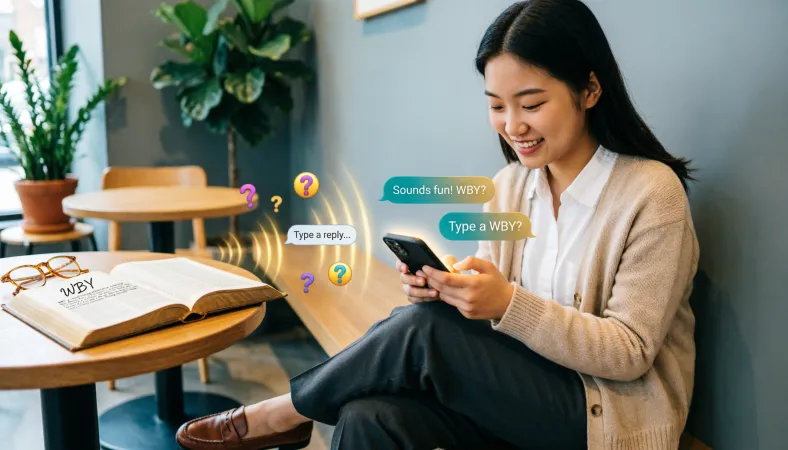
WBY stands for “What About You?” a quick way to ask someone the same question they just asked you, or to shift the conversation back toward them after sharing your own answer. It’s commonly used right after responding to a question like “how are you” or “what are you doing.”
Example Sentence: I’m doing pretty good today, just relaxing at home, wby?
In short: WBY = What About You? = Turning the Question Back.
Where Is “WBY” Commonly Used?
- 💬 Texting — One of the most common ways to keep a casual conversation flowing
- 📱 Instagram and Snapchat DMs — Frequently used after answering a question
- 👥 Group chats — Common when checking in with multiple people at once
- 🎮 Gaming and Discord chats — Used casually when catching up with friends
This phrase is casual and friendly, perfect for everyday texting, but too informal for professional or formal written communication.
Examples of “WBY” in Conversation
A: hey how’s your day going B: pretty good so far, just got out of class, wby?
A: what are you up to tonight B: probably just staying in, wby, got plans?
A: how was your weekend B: it was great, went hiking with some friends, wby?
A: you doing okay today B: yeah I’m alright, just a little tired, wby?
A: what did you end up eating for dinner B: just made some pasta, wby, did you cook tonight?
When to Use and When Not to Use “WBY”
✅ When to Use:
- Turning a question back to someone casually in a text
- Keeping a conversation flowing naturally with friends
- Checking in with multiple people in a group chat
❌ When Not to Use:
- In formal or professional communication
- Emails or written messages where clarity and full sentences are expected
- Situations that call for a more thoughtful, detailed response
| Context | Example Phrase | Why It Works |
| Friend Chat | “good here, wby? 😊” | Casual and conversational |
| Work Chat | “I’m doing well, how about you?” | Professional but still warm |
| “I hope this message finds you well.” | Formal and appropriate |
Similar Slang Words or Alternatives
| Slang | Meaning | When to Use |
| HBU | How about you | Nearly identical meaning to WBY |
| YW | You’re welcome | Different meaning, often confused due to similar format |
| U? | Shortened way of asking “you?” | Extremely casual, quick follow-up |
| And you? | Slightly more formal alternative | Everyday polite conversation |
| What about yourself? | Fully spelled-out formal version | Professional or polite context |
WBY vs. HBU: What’s the Difference?
WBY and HBU are essentially interchangeable, both mean “what about you” or “how about you,” just phrased slightly differently. Some people prefer one over the other simply out of habit or regional texting culture, but there’s no real difference in meaning or tone between the two. You’ll often see them used in nearly identical situations, right after answering a question and turning it back to the other person.
Why “WBY” Matters in Everyday Conversation
Small as it is, WBY plays a surprisingly important role in keeping conversations feeling balanced and two-sided. Without it, texting can start to feel a little one-directional, like you’re just answering questions instead of actually having a back-and-forth conversation. Adding “wby” shows genuine interest in the other person and keeps the exchange feeling natural, rather than like an interview.
This small habit of turning the question back is actually a pretty universal part of good conversational etiquette, whether it’s spoken out loud or typed out in a text. WBY just makes that habit quicker and easier in fast-paced digital conversations.
FAQs About WBY Meaning
What does WBY mean in texting?
WBY means “What About You?” a casual way of turning a question back to the person you’re texting after answering it yourself.
Is WBY the same as HBU?
Yes, they mean essentially the same thing, “what about you” and “how about you,” and are used interchangeably in casual texting.
Is WBY appropriate for work conversations?
It’s fairly casual, so it’s best used with friends rather than in professional emails or formal workplace communication.
Can WBY be used to start a conversation?
Not usually, it’s typically used as a follow-up after answering a question, rather than as an opener on its own.
Where did WBY come from?
Like most texting abbreviations, it developed naturally through casual online and text communication as a quick way to keep conversations flowing.
Is WBY only used in English texting?
It’s most common in English-language texting culture, though similar shorthand phrases exist informally in other languages and messaging styles too.
Does using WBY make a conversation feel less personal?
Not at all, in fact it usually does the opposite, showing that you’re genuinely interested in keeping the conversation balanced rather than just talking about yourself.
Conclusion
Now that you know, WBY means “What About You?” Those quick, easy follow-up questions in your texts probably make a lot more sense. It’s a simple, natural way to keep a conversation going without needing to type out a full sentence every time. Next time someone asks how your day is going, you’ll know exactly how to turn the question right back around.
Whether you’re catching up with a friend, checking in on someone’s day, or just keeping a casual chat balanced, WBY gives you a quick and easy way to show you care about their side of the conversation too. Now that you understand exactly how and when to use it, you’ll probably notice yourself typing it more naturally than ever.

Jane Austen is a writer at Pickuplix.com who creates fun, witty pickup lines made to spark smiles and easy conversations. Her style is playful, light, and perfect for modern flirting.