
You’ve probably heard the word “kimochi” in anime, Japanese songs, or even in random online comments and wondered what it actually means.
It looks simple, but it’s a word with more nuance than most people realize and one that’s often misunderstood online.
Understanding where it comes from and how it’s really used in Japan can help clear up a lot of confusion.
Quick Answer:
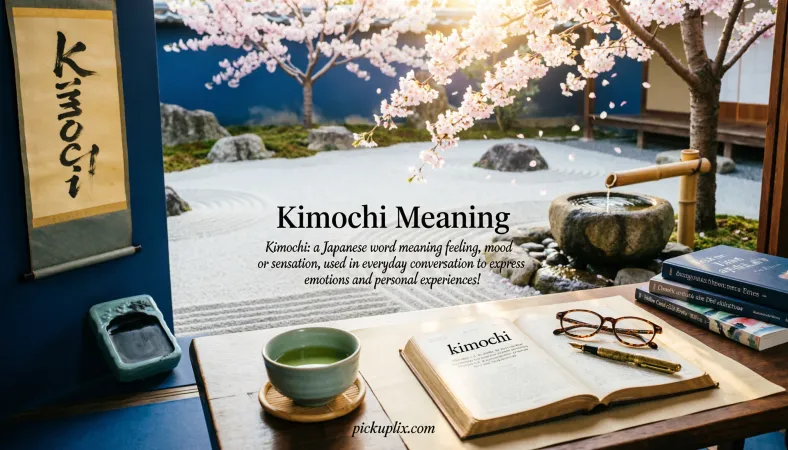
Kimochi (気持ち) is a Japanese word meaning “feeling,” “mood,” or “sensation.”
It’s a neutral, everyday word in Japanese not slang and its exact meaning depends entirely on the words used around it.
What Does Kimochi Mean?
Kimochi (気持ち) is a standard Japanese word, not internet slang. It’s made up of two kanji: 気 (ki), meaning “spirit” or “energy,” and 持ち (mochi), meaning “to hold.” Together, they describe a feeling or emotion that a person is currently “holding” or experiencing.
On its own, kimochi is neutral; it simply means “feeling.” Its tone changes completely depending on what word follows it:
- Kimochi ii (気持ちいい) “It feels good” (a pleasant physical or emotional sensation)
- Kimochi warui (気持ち悪い) “It feels bad” or “gross/unpleasant”
Example Sentence: A warm bath after a long day can be described as “kimochi ii” it simply means it feels good.
In short: Kimochi = Feeling = Mood = Sensation.
Important: How “Kimochi” Is Often Misused Online
Here’s something worth knowing before using this word casually: outside of Japan, “kimochi” (especially “kimochi ii”) became widely known through anime and Japanese media clips shared online, where it’s often used in adult or suggestive contexts. Because of this, many non-Japanese speakers only associate the word with that specific usage, even though it’s a completely normal, everyday word in Japanese with no inherent inappropriate meaning.
If you’re learning Japanese or writing content about the word, it’s important to separate its real, everyday meaning from how it’s sometimes misused as a meme online. In actual Japanese conversation, kimochi is used constantly for completely ordinary things describing a good massage, nice weather, a comfortable chair, or simply asking how someone feels.
Where Is Kimochi Commonly Used?
- 🗾 Everyday Japanese conversation describing feelings, moods, or physical sensations
- 🎬 Anime and Japanese TV shows used naturally by characters to express emotion
- 📚 Japanese language learning content a common early-vocabulary word
- 💬 Online pop-culture references though often taken out of its original context
Examples of Kimochi in Everyday Japanese
A: どんな気持ち? (What are you feeling?) B: ちょっと疲れた気持ち。 (A bit of a tired feeling.)
A: このお風呂、気持ちいいね。 (This bath feels nice.) B: うん、本当に気持ちいい。 (Yeah, it really does.)
A: 今日の天気、気持ちいい。 (Today’s weather feels great.) B: そうだね、散歩したい気分。 (Yeah、 makes me want to go for a walk.)
A: その匂い、気持ち悪い。 (That smell is gross.) B: わかる、私も気持ち悪いと思った。 (I know、 I thought so too.)
When to Use and When Not to Use Kimochi
✅ When to Use:
- Describing a pleasant physical sensation (a massage, warm weather, comfortable seat)
- Talking about your mood or emotional state in Japanese
- Learning or teaching basic Japanese vocabulary
❌ When Not to Use:
- Casually online without understanding its common (mis)association it may come across differently than intended to some audiences
- As a direct English-conversation substitute it doesn’t translate to one single English word
| Context | Example Phrase | Why It Works |
| Everyday Japanese | “この椅子、気持ちいい。” (This chair feels comfortable.) | Correct, natural usage |
| Language Learning | “Kimochi means feeling in Japanese.” | Clear educational context |
| Online Slang (caution) | Used in meme contexts | Often misunderstood outside Japan |
Similar Words or Alternatives
| Word | Meaning | When to Use |
| Kanji (感じ) | A feeling or sense of something | General impressions |
| Kigen (機嫌) | Mood or temper | Describing someone’s mood (good/bad) |
| Kanjou (感情) | Emotion | Formal or psychological context |
| Kimoi (キモい) | Slang for “gross/creepy” (short for kimochi warui) | Very casual, informal speech |
FAQs About Kimochi Meaning
What does kimochi mean in Japanese?
Kimochi (気持ち) means “feeling,” “mood,” or “sensation.” It’s a normal, everyday Japanese word, not slang.
Is kimochi a bad word?
No, kimochi itself isn’t inappropriate. It’s a completely neutral word its meaning depends on the context and the words paired with it.
Why is kimochi associated with anime memes online?
The phrase “kimochi ii” became widely shared through clips from Japanese media, leading many non-Japanese speakers online to associate it primarily with that specific usage, even though the word is used constantly in normal, everyday Japanese conversation.
What’s the difference between kimochi and kimochi ii?
Kimochi alone just means “feeling.” Adding “ii” (good) makes it “kimochi ii,” meaning “it feels good” a complete phrase, not just the base word.
Is kimochi used in casual or formal Japanese?
Both. It’s flexible enough for casual daily conversation and can also appear in more descriptive or formal writing.
Can I use kimochi in a sentence by itself?
Yes, but it’s more common to pair it with another word (like ii or warui) to clarify whether the feeling is good or bad.
Conclusion
Understanding the real meaning of kimochi (気持ち) helps clear up a lot of online confusion. At its core, it’s simply the Japanese word for “feeling” or “mood” an everyday term used constantly in normal conversation, far removed from the narrow context many people associate it with online. Learning the actual meaning behind words like kimochi is a great way to build a more accurate understanding of Japanese language and culture.

Jane Austen is a writer at Pickuplix.com who creates fun, witty pickup lines made to spark smiles and easy conversations. Her style is playful, light, and perfect for modern flirting.